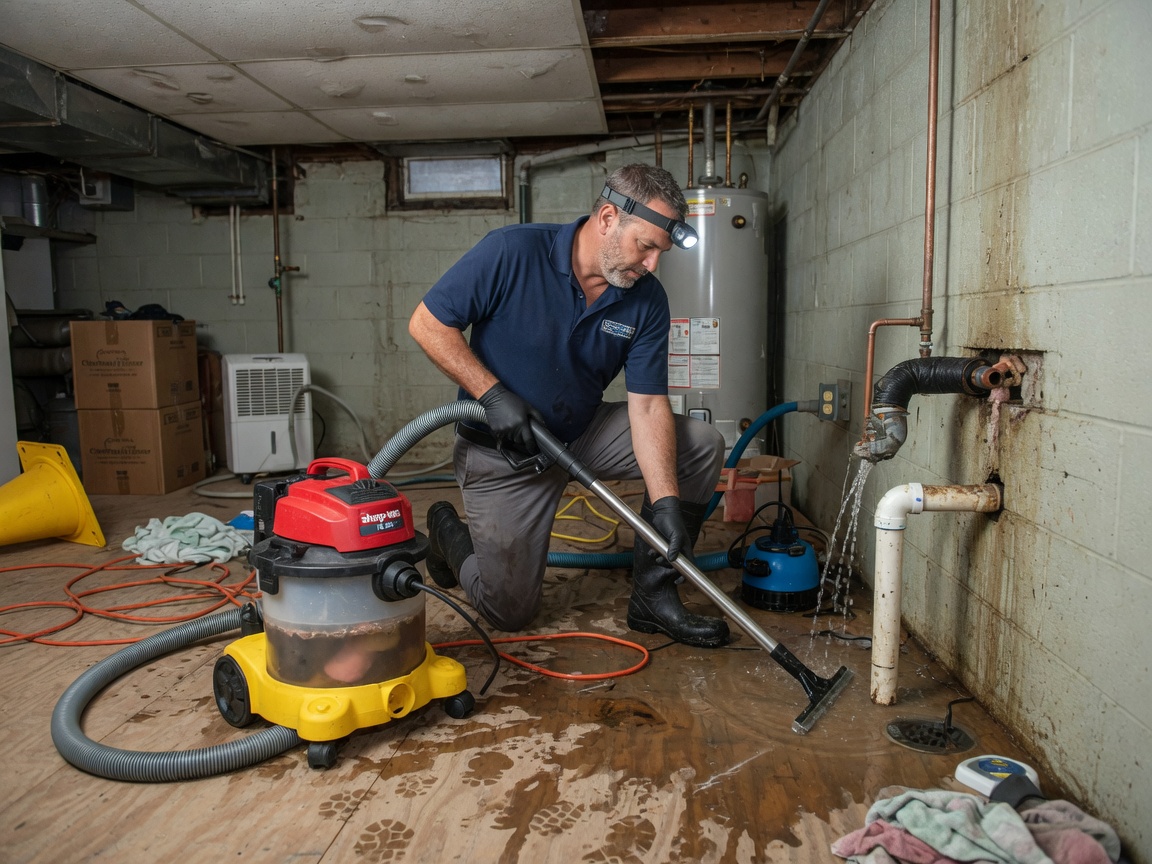
Oshkosh homes built before 1960 often have galvanized or cast-iron supply lines that corrode from the inside, especially in Northwest neighborhoods where soil moisture stays high year-round. When a pinhole leak develops behind a wall or under a slab, water migrates along the clay-heavy subgrade and pools against the foundation footer, creating hidden saturation that standard fans cannot reach. Extraction crews must cut strategic weep holes and use sub-floor drying mats rated for 150 CFM to pull moisture from the joist bays without removing entire floors.
Winter pipe bursts are common once temperatures drop below zero for several nights; the city’s older stock in Downtown lacks modern insulation around supply lines near exterior walls. After the water is shut off at the curb, crews use moisture meters calibrated for plaster and lath to map migration paths that travel upward two stories through stud cavities. Leaving even 12 percent residual moisture allows mold to colonize within 48 hours in the humid continental conditions that follow a thaw.
University of Wisconsin-Oshkosh dormitories and the Oshkosh Public Museum both sit on original city infrastructure that still uses lead-joint piping in some laterals. When these lines fail, the resulting flow can reach 15 gallons per minute before the valve is located, requiring high-volume truck-mounted extraction to stay ahead of the inflow while the city water department isolates the main.
Technician insight
In Oshkosh the thing that catches most people out with Plumbing Leak Water Extraction is how quickly water travels along the clay subsoil in Northwest neighborhoods and then wicks back up into plaster walls two rooms away. Older galvanized lines in homes near the University of Wisconsin-Oshkosh often fail right where they enter the foundation, and homeowners keep running fans that only dry the surface while the joists stay wet.
Downtown bathroom supply line failure
A second-floor supply valve split during a January freeze in a 1920s home near the Oshkosh Public Museum. Water traveled through floor joists into the first-floor dining room plaster. Crews isolated the line at the curb, extracted from both levels with cavity drying mats, and returned for three monitoring visits until readings matched the unaffected plaster.
Plumbing Leak Water Extraction Services We Offer
✓Slab Leak Water Extraction
Locates and extracts water from under concrete slabs common in Northwest Oshkosh ranch homes where supply lines run beneath the pour.
✓Pipe Burst Emergency Removal
Rapid extraction after frozen supply lines rupture during Winnebago County cold snaps, preventing saturation of hardwood and subfloors.
✓Bathroom Plumbing Leak Cleanup
Removes water from failed supply valves or drain joints behind tubs and showers before it reaches adjacent rooms in multi-story Downtown buildings.
✓Kitchen Supply Line Extraction
Targets leaks at dishwasher and sink connections that travel under cabinets and into adjacent drywall in older Winnebago County kitchens.
✓Ceiling Leak Water Extraction
Drains and dries water that has migrated from upper-floor plumbing into plaster ceilings, common in pre-war homes near the Oshkosh Public Museum.
Plumbing Leak Water Extraction Cost in Oshkosh, WI
| Service | Typical Range | What Affects It |
|---|---|---|
| Single-room plumbing leak extraction | $350–$650 | Price rises with hardwood or plaster involvement. |
| Multi-room or basement extraction | $700–$1,400 | Depends on migration into joist bays and soil saturation. |
| Slab leak water removal | $900–$1,800 | Includes weep-hole access and extended drying time. |
Ranges are typical for Oshkosh, WI and confirmed with an exact written quote before any work starts.
How it works
- 1
Arrival and Source Isolation
Technician arrives from the Washburn Street base, shuts off water at the meter, and confirms the leak origin with acoustic listening equipment.
- 2
Moisture Mapping
Infrared and pin meters document saturation in walls, floors, and joist bays while noting migration toward the clay soils typical around the Fox River.
- 3
Extraction and Containment
Truck-mounted units pull standing water; containment barriers prevent cross-contamination into unaffected rooms common in connected Downtown row houses.
- 4
Drying Verification
Daily moisture readings continue until levels match unaffected materials; final clearance is given before any reconstruction begins.
Pricing
Pricing varies by volume of water, number of affected rooms, and whether slab or multi-story drying is required.