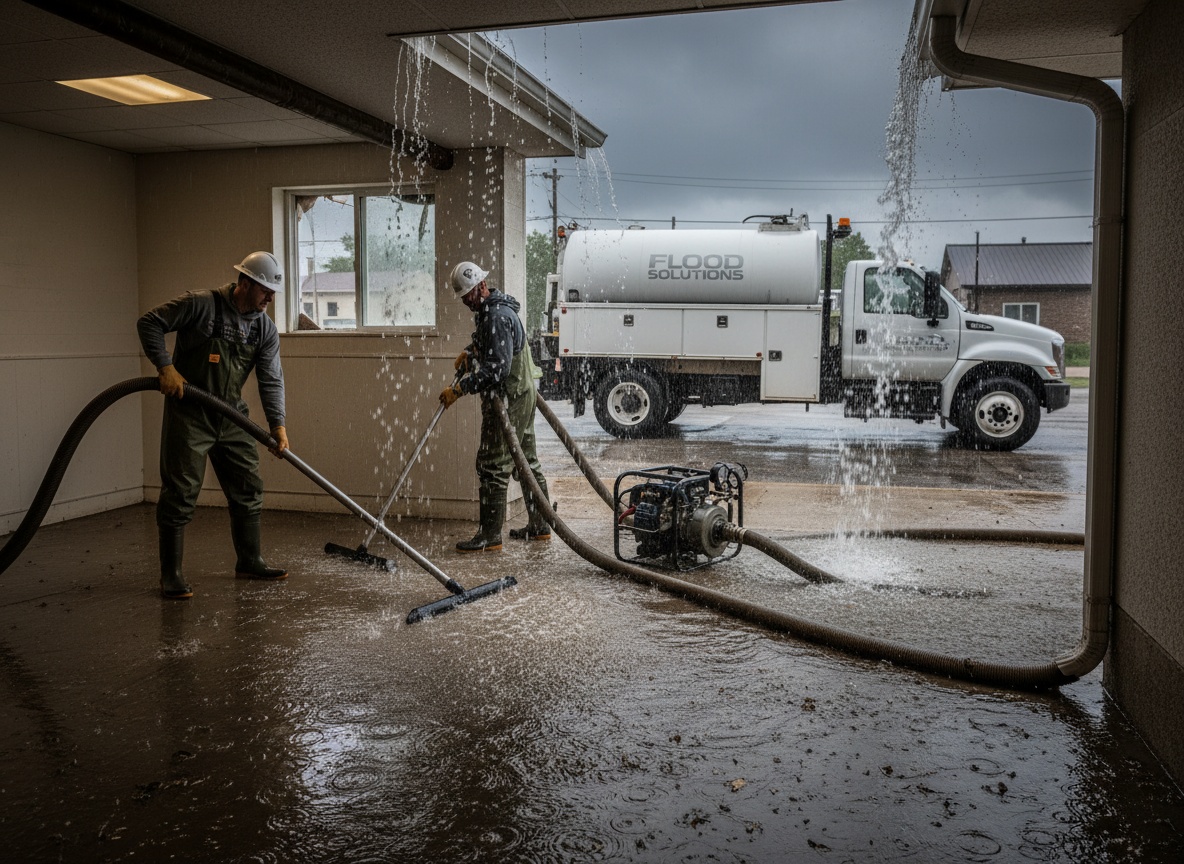
Heavy rain events in Oshkosh often overwhelm older brick and frame homes built before 1950 in the Northwest neighborhood and near the University of Wisconsin-Oshkosh. These properties frequently have limestone foundations and clay-heavy soils that hold moisture, turning a single downpour into standing water in basements within hours. Extraction crews must account for the humid continental climate that brings sudden warm-season storms after cold winters, which can crack aging mortar joints and create hidden seepage paths along shared walls in denser Downtown blocks.
Equipment choice changes on the ground here because many Oshkosh basements lack modern sump systems and sit close to the Fox River watershed. Submersible pumps and truck-mounted extractors are standard, yet crews also deploy moisture meters along joists to catch water that has wicked into hardwood floors common in homes surrounding the Oshkosh Public Museum. Failure to pull water from under cabinets or behind lath-and-plaster walls leads to mold within days when summer humidity lingers near 80 percent.
Coordination with local drainage patterns matters. Runoff from paved streets in the Northwest funnels toward lower lots, so extraction routes must avoid pushing water into neighboring properties. Technicians document water depth and source before removal to satisfy Winnebago County insurance requirements and prevent disputes with nearby Fond du Lac or Green Bay carriers that sometimes cover cross-county claims.
Post-extraction drying protocols differ from new-construction jobs. Older Oshkosh plaster and lathe walls retain moisture longer than drywall, requiring slower dehumidification rates to avoid crumbling. Crews leave ventilation paths open while monitoring for hidden saturation in dirt crawl spaces that are still common south of downtown.
Technician insight
In Oshkosh the thing that catches most people out with Heavy Rain Water Extraction is how quickly clay soil around Northwest and Downtown foundations holds water after a summer storm. Older homes near the University of Wisconsin-Oshkosh often have no French drains, so water sits against limestone for days and travels laterally into shared walls. Homeowners who only pump the visible puddle miss the moisture that later shows up behind baseboards once the humid continental weather turns warm again.
Northwest Oshkosh Basement After July Storm
Heavy rain filled a 1920s basement on the west side. Water had migrated under the wooden floor and into the adjacent crawl space. Extraction removed 18 inches of standing water, followed by targeted drying of joists and plaster. The home dried without mold growth and passed the insurance inspection.
Heavy Rain Water Extraction Services We Offer
✓Basement Flood Extraction
Rapid removal of standing water from older Oshkosh basements after heavy rain using submersible pumps suited to clay soils.
✓Crawl Space Water Removal
Targeted extraction and drying of moisture trapped under Northwest neighborhood homes where river-adjacent lots collect runoff.
✓Attic Storm Leak Extraction
Removal of rain that enters through older Oshkosh roofs during warm-season thunderstorms common in Winnebago County.
✓Flooring and Carpet Extraction
Pulling water from hardwood and carpet in Downtown homes where heavy rain seeps through foundation cracks.
✓Wall Cavity Drying
Extraction of hidden moisture behind plaster walls in pre-1950 homes near the University of Wisconsin-Oshkosh.
Heavy Rain Water Extraction Cost in Oshkosh, WI
| Service | Typical Range | What Affects It |
|---|---|---|
| Single-room basement extraction | $450–$850 | Varies with depth and pump runtime in clay-soil lots |
| Full basement plus crawl space | $900–$1,600 | Higher when older floor joists require extended drying |
| Multi-level extraction after attic leak | $1,200–$2,100 | Depends on plaster wall saturation in pre-1950 homes |
Ranges are typical for Oshkosh, WI and confirmed with an exact written quote before any work starts.
How it works
- 1
Site Assessment
Technician inspects water depth, source, and affected materials in the specific Oshkosh neighborhood while noting soil and foundation conditions.
- 2
Water Extraction
Submersible pumps and extractors remove standing water, routing discharge away from neighboring properties along local drainage patterns.
- 3
Moisture Mapping
Meters locate residual saturation in floors, walls, and crawl spaces typical of older Winnebago County housing stock.
- 4
Drying And Monitoring
Dehumidifiers and air movers run until readings confirm safe levels, with daily checks for homes near the Fox River.
Pricing
Pricing depends on water volume, number of affected levels, and access constraints common in older Oshkosh homes.